
Saperavi
Kakheti's main red grape, with deep, dark wine. Made dry as Mukuzani or Napareuli, and semi-sweet as Kindzmarauli or Akhasheni.
Food & wine trail · updated 2026–27
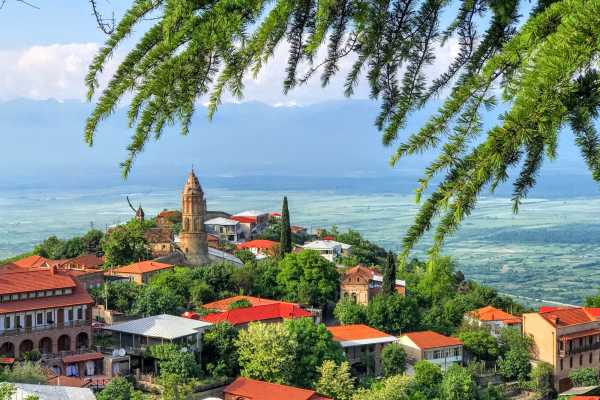
Kakheti is Georgia's wine country, in the east of the country and about two hours by car from Tbilisi. This is what our guides tell guests before the trip: how qvevri wine is made, which grapes to try, which towns to see, when the harvest is, what to eat and how to get there without drinking and driving.
 KAKHETI · WINE COUNTRY
✱PRIVATE DAY TRIPKakheti wine tour, from $105 per group (car and driver)→
At a glance
Book a day trip
All four are private: your own car and driver (a guide on the guided tickets), hotel pick-up in Tbilisi and a start time agreed when you book. Prices are per group.
For solo travellers and smaller budgets, our small-group Gareji and Rainbow Mountains 4x4 tour, from $67 per person, goes to the Kakheti semi-desert. It has no winery stop. More ideas: all private tours from Tbilisi.
Wine tastings need the legal drinking age. On the wine tour, extra tastings at the winery are paid on the spot.
How Georgian wine is made
People in Georgia have made wine for about 8,000 years. Clay jars with traces of wine from around 6000 BC were found at two sites about 50 km south of Tbilisi.
Grapes and labels
Most wine lists in Kakheti start with these four. On the label you will also see place names: these are protected wine names, like Rioja or Chablis.
Kakheti's main red grape, with deep, dark wine. Made dry as Mukuzani or Napareuli, and semi-sweet as Kindzmarauli or Akhasheni.
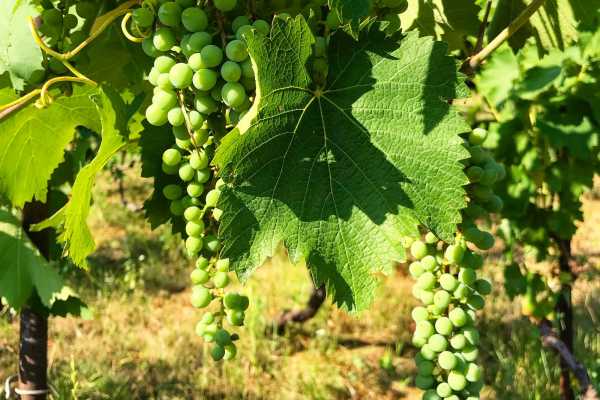
The classic Kakheti white. Fresh from a steel tank, golden and firm from a qvevri. The main grape of Tsinandali and Gurjaani wines.
An old Kakheti white grape. Made on its skins in a qvevri, it often gives amber wine with notes of dried apricot and walnut.
Kakhuri Mtsvane, "the green one" of Kakheti. Often blended with Rkatsiteli, as in Tsinandali wine.
Where to go
Most visitors see Kakheti in two parts: Sighnaghi and Bodbe on the road through Sagarejo, and Telavi over the Gombori Pass, with Tsinandali, Alaverdi, Gremi, Kvareli and Napareuli beyond it.
A small town on a hill above the Alazani Valley, with views across to the Caucasus on clear days. King Erekle II built its walls and towers, about 4 km of them, in the 18th century. Cafés, wine bars and guesthouses make it a good place to stay the night.
Just outside Sighnaghi. St Nino, who brought Christianity to Georgia in the 4th century, is buried here. Cover shoulders and knees; women usually cover their hair, and wraps are often available at the entrance.
Kakheti's main town. See the Batonis Tsikhe fortress, the giant plane tree said to be about 900 years old and the farmers' bazaar. A good base for the villages of the valley, with several hotels.
The 19th-century home of the Chavchavadze family, now a house museum with a 12-hectare garden. Its old cellar holds more than 16,000 bottles, some from the 1840s, and visitors are offered a tasting. The Tsinandali Festival is held at the estate in September.
St George's Cathedral, built in the 11th century and more than 55 m tall, was the tallest church in Georgia until 2004. The monks still make their own wine.
Capital of the Kingdom of Kakheti in the 16th and 17th centuries. The Church of the Archangels, built in 1565, and the royal residence still stand on the hill. Shah Abbas I destroyed the town in 1615.
Near Kvareli, Khareba winery keeps wine in rock tunnels dug in the early 1960s, at a steady 12–14 °C all year. Guided visits include a tasting of two wines. Our Grand Kakheti tour has a tasting stop in Kvareli.
Napareuli is a protected wine name for dry Saperavi and Rkatsiteli grown around villages such as Artana and Saniore. Come here to taste the wine where it grows, away from the busier towns.
Opening times of museums, estates and wineries change. Check before you go, or let your guide plan the stops.
Season planner 2026–27
Best right now (winter): quiet villages and cold cellars, a good time for a slow tasting day. The Gombori Pass can have snow. Book the wine tour →
Best right now (spring): green vineyards, and winemakers open last year's wine to taste it in spring. A good time for the Kakheti foodie day, from $290 per group. Book the foodie day →
Best right now (summer): long days and hot afternoons in the valley. Start early, see the churches in the morning and taste in a cool cellar after lunch. Book Grand Kakheti →
Best right now (autumn): harvest time. Rtveli usually runs in Kakheti from September into October, and later in autumn the vineyards turn yellow and red. Book the wine tour →
Few visitors, short days and warm tasting rooms. Wrap up for the drive over the hills.
Winter guide →Fresh green vines and the first tastings of last year's wine.
Spring guide →Hot in the valley. Plan an early start and long lunches in the shade.
Summer guide →The harvest, Rtveli, and the busiest weeks in the cellars. Book early.
Autumn guide →Harvest dates depend on the weather and on how ripe the grapes are. Mountain roads can close for a short time after snow.
The wine harvest
Rtveli is the harvest season, when families pick the grapes and press them the same day. Kakheti picks first.
More on the season: autumn tours in Georgia.
Tastings and manners
Which winery is best depends on what you like. Big estates such as Tsinandali and Khareba have guided visits. A family marani, the home cellar, is smaller and more personal.
Food
Kakheti cooking leans on meat, fresh bread and grapes.
On the foodie day there are no halal, gluten-free or lactose-free options. Tell us about your diet when you book.
Getting there
There are two main roads from Tbilisi: over the hills on the Gombori road to Telavi, or east through Sagarejo to Sighnaghi.
Plan your time
A day trip works well. With more time, sleep in Sighnaghi or Telavi and stay for a long dinner.
Choose one road. Sighnaghi and Bodbe with a wine stop, or Telavi over the Gombori Pass with the bazaar and a winery. Back in Tbilisi in the evening.
Alaverdi, Telavi, Kvareli, Gremi, Bodbe and Sighnaghi in one go, without a night away. Long but full.
Day one Sighnaghi and Bodbe, day two Tsinandali, Alaverdi and Gremi, day three Kvareli and the Napareuli villages, or a harvest day in season. Add David Gareji on the way.
Safety
The driver does not drink. Not one glass, not one chacha.
Let someone else drive
Taste as much as you like. We pick you up at your hotel in Tbilisi, drive the mountain roads and bring you back in the evening. Your own car and driver; on the guided tickets, a guide in English or Russian.
Why travel with us
Our guides are from Georgia. They explain the wine, the churches and the history in English or Russian.
Georgian National Tourism Award and Tripadvisor Travellers' Choice.
Private tours are priced per group, with free cancellation up to 24 hours before the start.
Guest reviews
FAQ
It depends on what you want. For a first visit, the Kakheti wine, history and culture tour covers Sighnaghi, Bodbe and a wine tasting, from $105 per group (car and driver). For food and more wine, the foodie day includes a cheese factory and at least 5 wines at a private winery, from $290 per group. To see the most in one day, take Grand Kakheti, 12 hours, from $245 per group.
Yes. Our Kakheti day trips take about 10 to 12 hours with hotel pick-up and drop-off in Tbilisi. In one day you see one part of the region well, or both parts at a faster pace on the Grand Kakheti tour.
Sighnaghi is about 1.5 to 2 hours by car through Sagarejo. Telavi is about 2 hours over the Gombori Pass, or 3 hours or more by minibus on the longer highway route.
Sighnaghi is the small hill town with walls, views and Bodbe Monastery next door. Telavi is the main town and the better base for Tsinandali, Alaverdi, Gremi and the wine villages. On a day trip, pick one; with two days, see both.
Wine made in a qvevri, an egg-shaped clay jar buried in the ground. The juice goes in with the skins, stalks and pips, the jar is sealed and the wine stays on the skins for five to six months.
Yes. The ancient Georgian qvevri winemaking method was added to UNESCO's list of the intangible cultural heritage of humanity in 2013.
White wine made like red: the white grapes stay on their skins while they ferment, often in a qvevri. The wine turns gold to orange and has more texture. Elsewhere it is often called orange wine.
Start with Saperavi, Kakheti's dark red grape, then the whites Rkatsiteli, Kisi and Mtsvane, both fresh and amber. On labels look for Tsinandali, Mukuzani, Napareuli and Kindzmarauli, which are protected wine names.
Usually from late August or September into October. The start moves with the weather: around 10 September in 2026 and around 2 September in 2025. Other regions of Georgia harvest later, until December.
Yes, some wineries and guesthouses run harvest days. Book well ahead and confirm a few days before, because the date can change.
For family cellars, yes: message or call a day or two before. Bigger estates have tasting rooms, but a booking still helps at weekends and in harvest season. On our tours we book the tastings for you.
It depends on your taste. Tsinandali, the old Chavchavadze estate with a cellar of more than 16,000 bottles, and the Khareba wine tunnels near Kvareli are well known and have guided visits. Small family cellars are more personal. Our guides choose the stops for each tour.
A Georgian feast with many dishes and many toasts. The tamada, the toastmaster, leads the table. Guests wait for a toast before they drink and touch glasses first.
A strong spirit made from grapes, often offered at the end of a tasting or a meal. It is much stronger than wine, so go slowly. Our foodie day includes a strong spirit in the tasting.
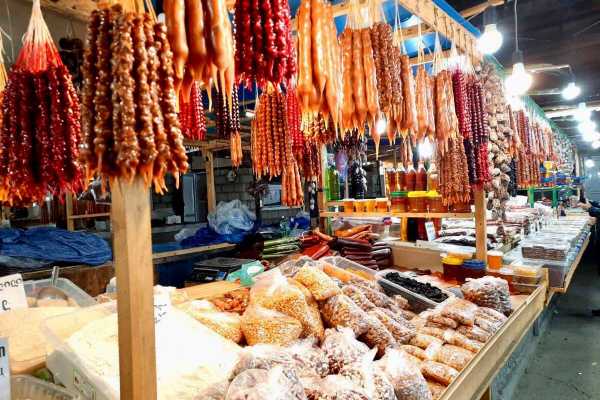
Mtsvadi grilled over vine cuttings, shoti bread from the clay oven, chakapuli with tarragon, ajapsandali if you are vegetarian, khinkali, and churchkhela for the road.
Take a marshrutka minibus from the bus station at Samgori metro. Fares were about 12 to 15 GEL in 2026 and the trip takes about 2 to 2.5 hours. Shared taxis also leave from Isani metro station.
Very low. Under Georgian law, penalties start above 0.3 per mille, and your licence can be suspended. The safe rule: the driver drinks nothing. Book a private tour with a driver-guide if you want to taste.
One day is enough for one part of the region. Two or three days let you see Sighnaghi, Telavi and the villages, and stay for a long dinner.
September and October for the harvest, May and June for green vineyards and mild days. Summer is hot in the valley; winter is quiet. See Georgia weather by month and our packing list.
Cover shoulders and knees. Women usually cover their hair, and some monasteries ask for a skirt. Wraps are often available at the entrance.
Our Kakheti wine tours are private and priced per group. For a small-group trip in Kakheti, join the Gareji and Rainbow Mountains 4x4 tour, from $67 per person. It has no winery stop.
The wine and spirit tastings need the legal drinking age. Tell us the ages in your group when you book and we will tell you what works.
Plan your trip
What our guests sort out before a trip to Kakheti, with the services we use and recommend.
More guides: Georgia travel tips, Tbilisi travel guide and entry requirements for Georgia.
Some links go to partners. If you book through them we may earn a small commission, at no extra cost to you.
Choose a wine tour on this page and book online. Questions about a tour or your booking? We reply on WhatsApp or email.
WINE & HISTORYBread and cheese at Badiauri, Bodbe Monastery, Sighnaghi and a wine factory tasting.
FOOD & WINETelavi bazaar, a cheese factory and a private winery with at least 5 wines.
 WINE
Gombori Pass, Alaverdi, Telavi, a tasting in Kvareli, Gremi, Bodbe and Sighnaghi.
 DESERT
Rainbow Mountains and David Gareji Monastery, then Bodbe and Sighnaghi.